Whenever I tell people I am an artist, the first question I get asked is this:
“Oh wow! That’s great! What style do you work in?”
Honestly, I love this question. I would respond with a simple:
“I work in multiple styles.”
And then I would get one of these two responses:
- “That’s exciting! Tell me more.”
- “Aren’t artists supposed to have a single distinctive style?”
And my answer would be the same for both.
I work in multiple styles because of three reasons:
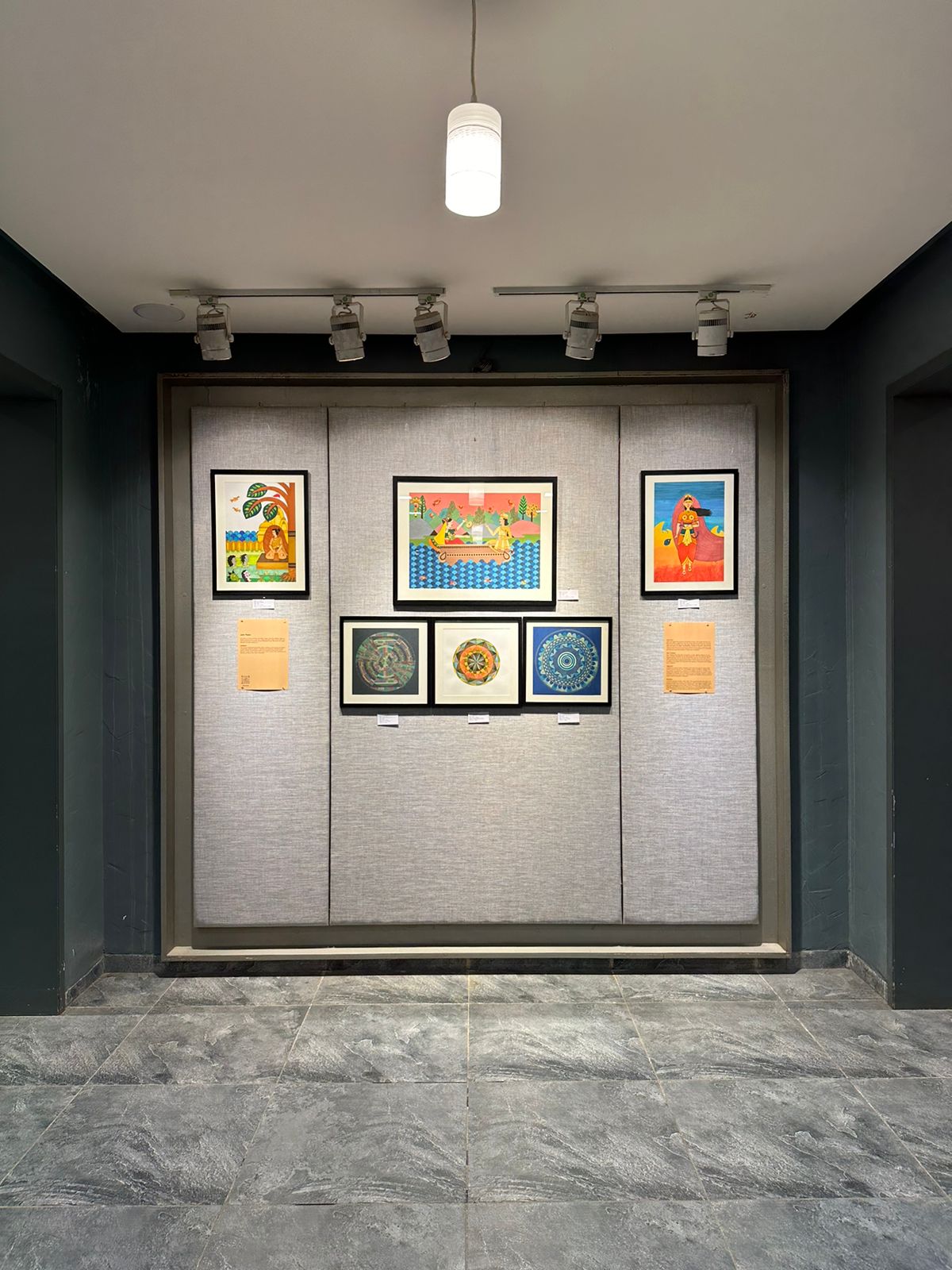
- Each style I work in requires different skills. My mandalas are quite math-heavy, and therefore require a lot of measuring. Spatial sense as well as a thorough understanding of the story is require to create the perfect composition for my folk art pieces. And my landscapes depend heavily on my knowledge of and fluency in colours.
- More styles = more mediums. Certain mediums like acrylics, are versatile and can be used across styles. Others are better suited for the requirements of a particular style, like pens, for mandalas. Working in multiple styles allows me to explore various mediums.
- Different styles, different communication patterns. While my folk art pieces tell a story, mandalas invite the viewers to form their own. Each style interacts differently, and thus creates different experiences with the viewers.
But here’s something common across the styles I work in:
Each style serves a higher purpose. My mandalas invite and encourage the viewers to be a part of the construction of meaning, making each artwork as much theirs as mine. As the viewer grows, so do their thoughts, and consequently, their interpretations of the work. Thus, my mandalas are designed to be long-term companions to the viewer. Similarly, the folk art works are meant to transport the viewer to a specific moment in a specific story, encouraging them to become a part of the narrative.
Thus, while the styles I work in are very different, they are all instruments for fulfilling a greater purpose. And that is why they do not look out of place, side by side.